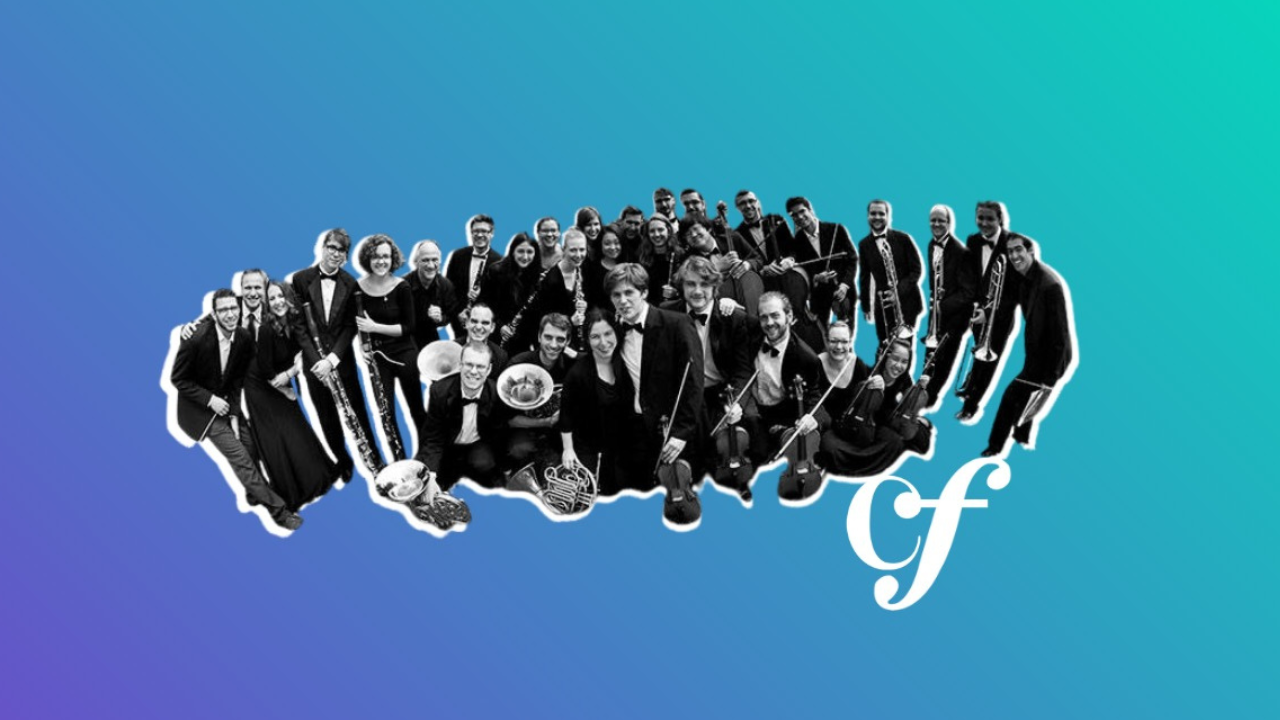
As Bathurst celebrates 200 years, ClassikFest Chaleur is marking its own milestone. A 14th season shaped by the same question that’s on a lot of minds this year: what does it mean to belong to a place with this much history?
For Artistic Director David Scott, the answer started with looking closer to home. “From the beginning, I knew I wanted this year’s programming to reflect the history and identity of our region,” he says, “while also showcasing composers and musicians from here at home.” What began in 2013 as a way to bring high-quality classical music to the Chaleur region has, in his words, grown into “a place where people from different backgrounds, languages, and communities can gather and share a meaningful experience together”.
That local focus runs through the whole lineup. Ludmila Knezkova-Hussey’s opera Traversées, which premiered in Bathurst in the early 2000s and as far as David knows it hasn’t been heard in the city since, returns in an aria arranged for clarinet, with Knezkova-Hussey’s own blessing. Carl Philippe Gionet’s 12 Acadian Folk Songs get a new arrangement too, passed between instrumentalists instead of sung by one voice, letting “each musician tell a piece of the story.”
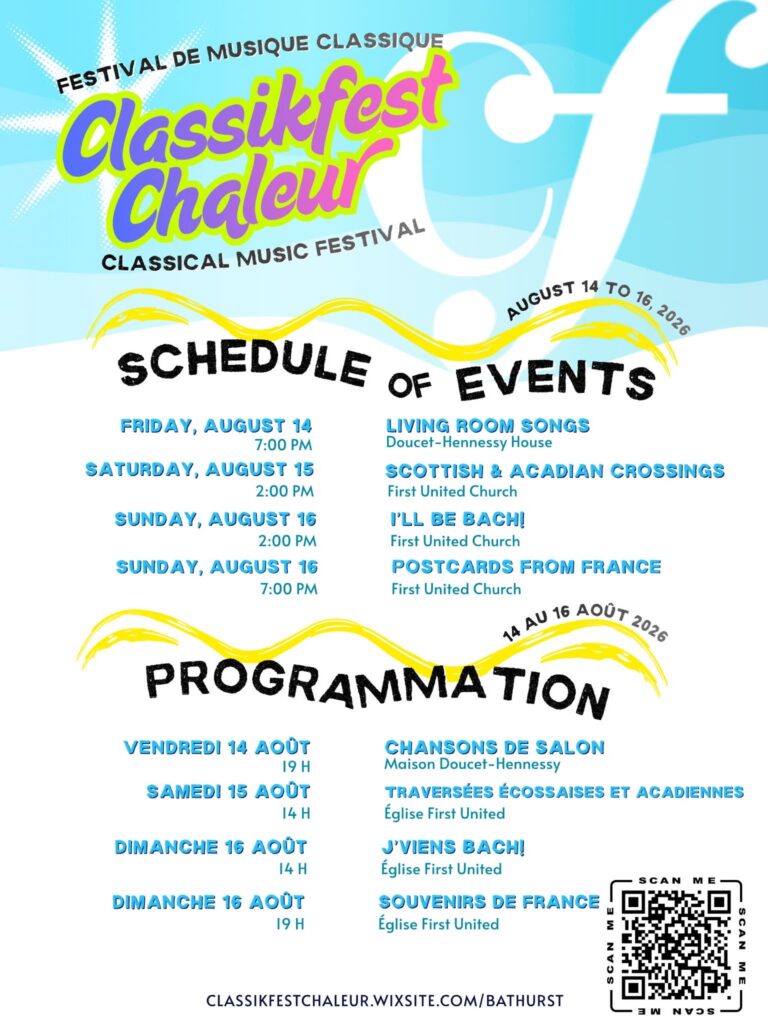
Even Beethoven gets a local thread. His 12 Scottish Songs, including Auld Lang Syne, share a bicentennial of their own this year, and for Scott, pairing them with Gionet’s Acadian songs on National Acadian Day wasn’t incidental. “In my own personal genealogy, I have both Acadian and Scottish roots,” he says. Different as the traditions are, he points out the songs share the same subject matter: love, family, work, land, leaving and coming home. “Whether it is an Acadian folk song or a Scottish song, the emotions are remarkably similar.”
Scott himself takes the stage for Jean Françaix’s Clarinet Concerto, a piece he’s wanted to perform since his graduate studies, technically punishing and rarely programmed, and, as he puts it, “both a personal artistic challenge and an opportunity to share something truly remarkable with our community.” It anchors a set spanning three centuries of French music, deliberately built to introduce audiences to lesser-known composers like Louise Farrenc alongside the big names.
Through it all, admission stays by donation, a policy Scott traces directly back to the festival’s founding purpose: removing barriers, not the value of the music. “Our priority is to fill the seats, bring people together, and hopefully make someone’s day a little better through the experience of live music.”
Ultimately, that’s the note Scott hopes people leave on, especially those hearing classical music live for the first time. “I hope people leave feeling a little lighter, a little more connected, and with the feeling that they were part of something special in their own community.”
ClassikFest Chaleur runs August 14–16, 2026, at venues across Bathurst.