
ObsidianEbony.
Real wood. Jet black. The music industry’s most credible alternative to natural ebony.
For decades, the music industry relied on ebony to craft fine instruments. But as this tropical black wood became endangered, musicians and manufacturers faced growing supply problems. ThermalWood Canada responded with Obsidian Ebony — a real wood alternative that solves scarcity issues.
It delivers durability, stability, and a glass-like finish that rivals traditional ebony. Developed with local scientists in New Brunswick and tested by major players like Fender and Martin, Obsidian Ebony offers a sustainable choice for modern instrument making.
Based inBathurst, NB.
Based in Bathurst, New Brunswick — “God’s Country,” as co-owner Bob Lennon calls it — ThermalWood Canada started in 2008. At the time, it was one of just twelve thermal modification companies in North America.
Despite launching during what Lennon calls “the worst time to start a business,” the company thrived. By applying heat and steam in a controlled environment, they transformed locally sourced wood into rot-resistant material used for decking, cladding, and musical instruments.
Their introduction to the ebony crisis came while producing highly stable maple guitar necks. Rising scarcity and ethical concerns about ebony led to a search for an alternative that could meet the high standards of musicians and luthiers.
The ebonycrisis.
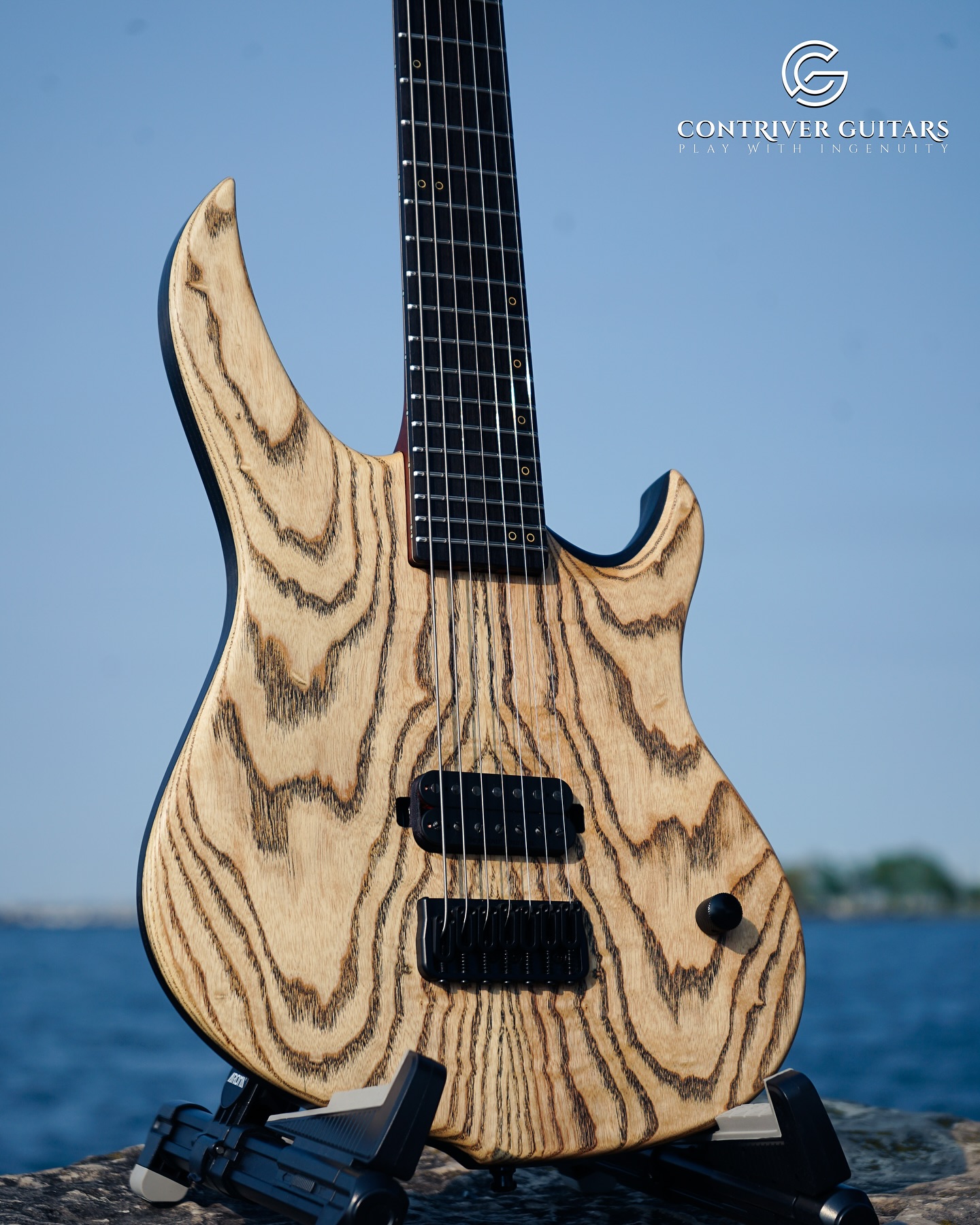
Black ebony (Diospyros ebenum) grows in India, Sri Lanka, Madagascar, and parts of Africa. Prized for centuries, this dense heartwood is known for beauty, hardness, and moisture resistance. Parisian cabinetmakers in the 16th century were even called “ébénistes” for their use of ebony.
Instruments have long depended on ebony for fingerboards and tailpieces. Its density and stability made it the perfect material. But overharvesting devastated natural supplies, and strict restrictions made sourcing legal ebony expensive and difficult.
ObsidianEbony.
The breakthrough came by accident. ThermalWood Canada worked with scientists in Fredericton, sending them wood samples for experiments. When the samples returned, they were dramatically transformed. “We looked at each other and went, ‘whoa!’” Lennon recalls. “Then we asked, ‘can we do this in black?’”
That moment sparked five years of development. Partnering with Fender, Martin, and a global network of luthiers, they gathered feedback. The response was clear: Obsidian Ebony not only worked — in many cases it enhanced the playing experience.
Musicians said itimproved everything.
While growing their core business, the company refined the process. The feedback from musicians and luthiers was clear — Obsidian Ebony not only worked but sometimes enhanced the playing experience. Musicians said it improved control, tone, and precision.
“We had a small test lab that might make a hundred a day, not thousands. The equipment to do this didn’t exist.” — Bob Lennon
To solve the scale problem, ThermalWood Canada partnered with the New Brunswick Community College Innovation Group (CCNB INNOV). Their engineers designed and built specialized equipment to scale output — making it possible to meet global industry demand.

Performancethat rivals ebony.
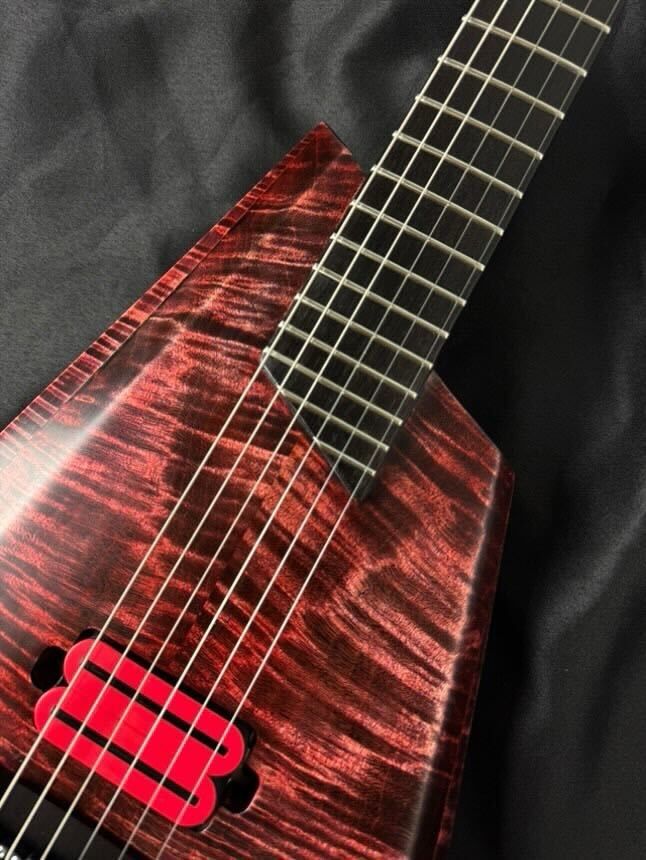
The fretboard drives tone and playability. Musicians need wood that holds up to constant pressure, resists grooves, and maintains smoothness. If the material fails, the instrument suffers in sound and feel.
Ebony set the standard for hardness and wear resistance. Obsidian Ebony had to match or surpass it. Testing confirmed the new material met the challenge — showing excellent hardness, stiffness, and flexibility, while resisting wear over time. In many cases, it equaled or outperformed natural ebony.
Today, Obsidian Ebony proves that sustainability and performance can go hand in hand. With its unmatched durability, striking black finish, and sustainable origin, it is setting a new standard for the music industry.
Shop Obsidian EbonyHardness & Wear Resistance
Testing confirmed Obsidian Ebony meets or exceeds the hardness of natural ebony — holding up to constant pressure, string wear, and repeated use over the lifetime of an instrument.
Stiffness & Flexibility
Excellent stiffness-to-weight ratio combined with the right degree of flexibility — critical for fretboard performance, tone transmission, and long-term stability.
Jet Black, Glass-Like Finish
The deep, uniform black coloration goes all the way through the wood — not a surface treatment. The finish is glass-smooth right off the process, requiring minimal preparation.
CITES-Unrestricted
Natural ebony faces strict international trade restrictions. Obsidian Ebony is made from locally sourced North American hardwood — no CITES permits, no supply chain complications, no ethical concerns.
Real Wood — Not Composite
Unlike synthetic ebony alternatives made from plastic or composite materials, Obsidian Ebony is genuine wood — with the acoustic properties, workability, and feel that luthiers demand.
Luthiers speakfor themselves.
In an effort to learn more about our product through the eyes of instrument and furniture builders, ThermalWood Canada sent Obsidian samples all over the world.
Ted Woodford
Robbie O’Brien
Darrell Peart
What the woodworkingcommunity says.
We’re always thankful for the feedback we receive. Good or bad, it’s essential for us to know from seasoned and young woodworkers exactly what it is like to work with Obsidian Ebony. These are some of the detailed testimonials we’ve received since launching.
I’ve done about 10 fingerboards with the Obsidian Ebony and have really been enjoying working with the product. It’s much more dense than Richlite, and in my opinion, feels much more durable.
It cuts, it plains, it joints, it drills, just like real ebony. It even accepts fretwire and inlays just like real ebony. I even placed it on my bench with pieces of real ebony and it was hard to tell the difference.
It looks beautiful, it has a top tone that is better than Richlite. I really like the way that it works, it responds more like wood, and the fact that I can actually see some grain direction inside really gives it a natural appearance. The hue of black looks natural.
It’s very easy to work with vis-a-vis shaping and sanding. It glues very well with a 120 grit scuff to the surface. Finishes and seals well. At the end of the day, a great ebony replacement that I will definitely be continuing to use.
Overall, I’m very impressed with the Obsidian. If I was to have traditional ebony and Obsidian Ebony side by side I’d be hard pressed to tell the difference. I can highly recommend the Obsidian Ebony.
It ticks all of the boxes I like for my material. Looks, workability, durability, domestic product.
I haven’t had any consistency or stability issues. It’s a very consistent product by wood standards.
Once processed, it was nearly impossible to tell the difference from across the room. I compared an Obsidian blank and a piece of good quality black gaboon ebony, sanded both up to 1500 grit and dry buffed both on a cotton wheel with a coat of beeswax polished out by hand. Side by side on the bench they were nearly identical. If anything the Obsidian Ebony was able to achieve a higher degree of polished sheen and gloss.
Availablenow.
All Obsidian Ebony products are available directly from our online store. Guitar fretboard blanks, bridge blanks, violin, viola, and cello fingerboards, bass fretboards, and assorted packs.
Guitar Fretboard Blank
Bass Fretboard Blank
Bridge Blank
Viola Fingerboard Blank
Violin Fingerboard Blank
Cello Fingerboard Blank
Hobby Pack — Off-Grade Light Black
Mystery Assorted Pack — 10 Mixed Pieces
Find Obsidian Ebonynear you.
Obsidian Ebony is available through specialized luthier supply partners in Europe and North America. Contact them directly for instrument blanks, tonewoods, and custom orders.
Guitars & Woods
4590-348 Freamunde, Portugal
The future ofebony is here.
Order directly from our store, contact a distributor, or get in touch with ThermalWood Canada for custom orders and bulk pricing.