
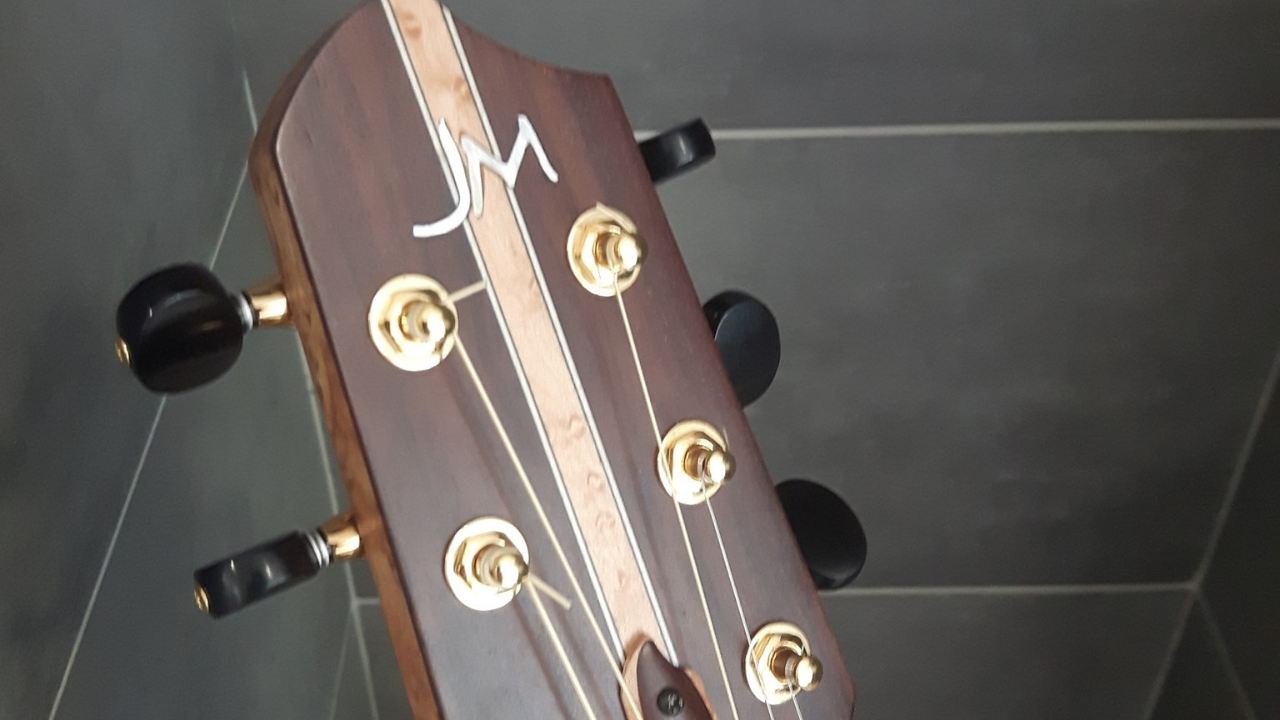
Just outside the western boundary of Kouchibouguac National Park, along one of the quieter stretches of New Brunswick’s coastline, you’ll find a small workshop where patience, craftsmanship, and music all come together. It’s here that JM Guitars has been building custom acoustic instruments since 2015, guitars designed not just to make music, but to reflect the personality and style of the player holding them.
For founder and builder James Malejczuk, the journey into guitar making began the same way it does for many musicians: simply by playing. Like a lot of guitar players, curiosity eventually crept in. What made one instrument sound different from another? Why did some guitars feel better in the hands than others? Over time, that curiosity grew into a deeper fascination with the structure, tone, and small details that shape the voice of an instrument.
That interest eventually led James to complete an intensive guitar-building course. What started as an interest quickly became something more serious, a craft that blends artistry, precision, and an incredible amount of patience. Today, every instrument built in the JM Guitars workshop reflects that balance. Each guitar is carefully shaped and assembled by hand with attention to resonance, stability, and long-term performance. In the world of bespoke instruments, those small details can make all the difference.
Like many modern luthiers, James has also been exploring new materials as sustainability and supply challenges continue to influence the world of instrument building. One of those materials is Obsidian Ebony, a resin-infused maple developed as an alternative to traditional ebony.
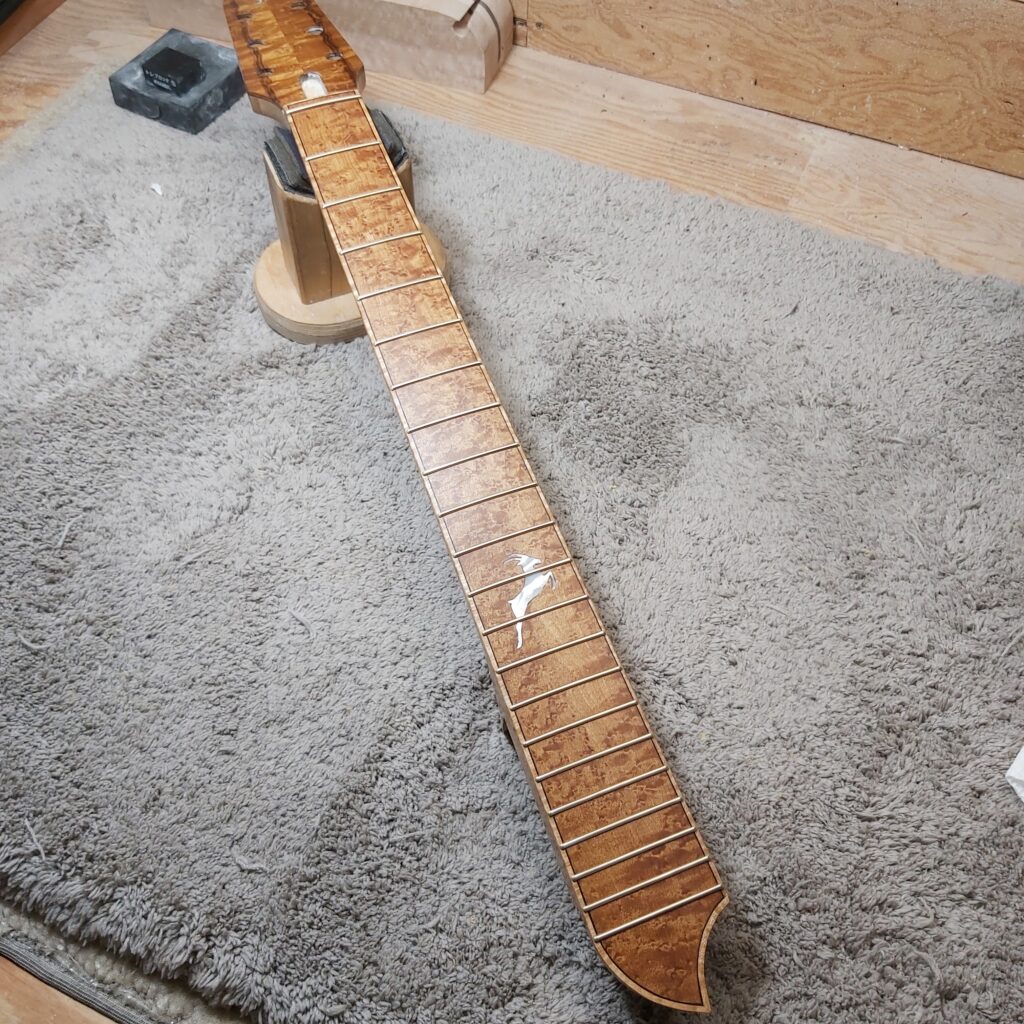
When James first began working with the material, the early impressions were very positive. The colour consistency and uniform appearance were close to what builders expect from premium ebony. Once the wood entered the build process, its workability quickly stood out. According to James, Obsidian Ebony cuts, shapes, and sands well using the same techniques normally used for fretboard preparation. Because of the resin infusion process, traditional sandpaper can load a little more quickly, but switching to mesh abrasives such as Mirka Abranet solved that issue easily. When thickness sanding, lighter passes also help maintain precision and protect both tooling and surface quality.
Overall, James rated his experience with Obsidian Ebony at an eight out of ten and plans to continue using it in future builds. His workshop near Kouchibouguac reflects a broader shift happening across the world of modern lutherie. This is where builders remain deeply connected to tradition while also exploring new materials that support consistency, sustainability, and performance. From that quiet corner of New Brunswick, James Malejczuk continues to craft instruments one at a time, building guitars that are shaped by hand and designed to carry a player’s sound for years to come.